The Journal · Sourcing
Why we grow our algae instead of harvesting it from the ocean.
Algae’s entire talent is absorbing whatever surrounds it. Which is exactly why it matters, quite a lot, what surrounded it.
Eight studies cited — each one linked beside the claim it supports.
01The question
A brand built on algae, avoiding the ocean on purpose.
It’s a strange thing to build a brand around algae and then go out of your way to avoid the ocean, which is where most people assume algae comes from in the first place.
An aside
And to be fair, most of it does. That’s sort of the problem.
The question we get, usually phrased more politely than this, is basically: if algae is the active ingredient, where is it coming from, and what came along with it?
Which is a fair question. If you’re the kind of person who reads the back of the box before anything touches your face, it’s probably the first one you’d ask.
So let’s actually answer it — because the answer is more or less the whole reason this brand exists.
02The biology
Algae’s best trait is also the thing that should worry you.
Algae doesn’t have roots, or a gut, or a liver, or anything else that filters what goes into it.
It absorbs directly across its surface, straight out of the water it’s sitting in. Dissolved minerals, nitrogen, trace metals, whatever happens to be suspended nearby.
The technical word
Biosorption. Algae is so efficient at it that environmental engineers deliberately grow it in contaminated water — to clean the water up.
Which is genuinely useful, and also worth reading a second time from the other direction.
Because if algae is a sponge, then algae grown in the ocean shows up at the factory already full.
Not full of anything anyone put there on purpose. Just full of whatever that stretch of water was carrying that season — which, after two centuries of agricultural runoff, coastal industrial discharge and general human output, is not nothing.
The ocean is the largest unfiltered mixing bowl on the planet.
Nothing growing in it gets to opt out.
That isn’t a vibe, by the way. People have measured it.
03The testing
What the testing shows. Including the part nobody expected.
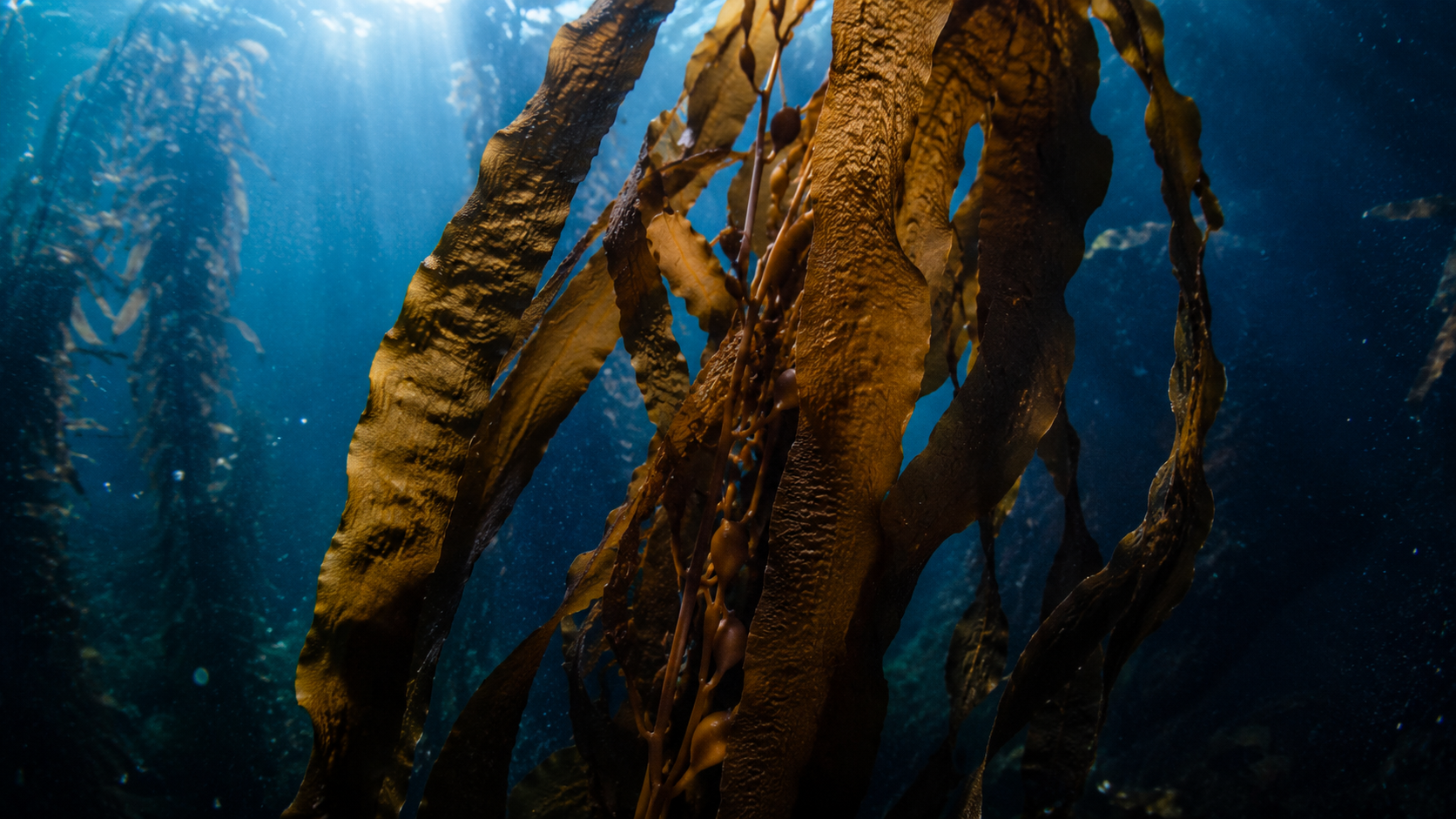
In 2023, a group of researchers measured arsenic, cadmium, lead and mercury in sugar kelp (Saccharina latissima) across New England.
They went in expecting contamination to cluster around obvious pollution sources — which is what most of us would assume.
That’s not what happened. Elevated concentrations showed up broadly, and cadmium and arsenic kept landing at levels the authors themselves describe as being of regulatory concern.
Two details in that paper matter more than the headline number.
-
Detail one
Distance didn’t protect anything
Proximity to a known contamination source didn’t predict much of anything. Distance wasn’t the protective factor everyone assumed it was.
-
Detail two
Farmed was no different
It didn’t matter whether the kelp was wild or ocean-farmed. Both showed it.
That second one is worth slowing down on, because “sustainably ocean-farmed” is currently doing an enormous amount of work in beauty marketing.
And ocean farming is a real improvement, to be clear — at least for the ecosystem. It doesn’t strip wild kelp forests, it creates habitat, and we’re glad it exists.
But a farm suspended in open water is still open water.
The rope is new.
The water isn’t.
Ocean farming changes who owns the kelp. It doesn’t change what the kelp is standing in.
Wider reviews of commercial seaweed supply chains keep finding the same pattern — and they tend to note something else we think consumers should probably know: most regulatory frameworks still don’t have seaweed-specific heavy metal limits.
European food safety analyses already list seaweed as a meaningful contributor to dietary cadmium, lead and inorganic arsenic.
The standards are being written after the category scaled. Which is usually how that goes.
04The plastic
And then there’s the plastic.
Since algae holds onto whatever touches it, it also holds onto particles.
Lab work found that the brown seaweed Fucus vesiculosus retains suspended microplastics right on its surface — and the amount it retained tracked with how much plastic was in the surrounding water.
Which is the part worth sitting with. There’s no threshold where the seaweed says enough.
It just mirrors its environment.
In actual products on shelves, researchers who analysed 24 brands of packaged nori found microplastic particles throughout.
0.9–3.0
microplastic particles per gram of dried nori, across 24 commercial brands
Field surveys of some seaweed species have recorded surface microplastic loads hundreds to even thousands of times more concentrated than the seawater around them.
So it isn’t only mirroring the water. It’s collecting from it.
If you were about to say “but ours is from pristine remote waters”
That defence is weaker than it sounds. Microplastic surveys off the Maine coast have found open ocean samples running higher than the coastal ones. Distance from a city is not distance from plastic.
There’s one more thing that compounds all of this: microplastic particles adsorb heavy metals onto their surfaces.
So the two contaminants don’t sit in separate columns on a lab report.
They tend to travel together.
05The decision
So we took the variable out instead of managing it.
We could have written a sourcing standard.
Vet suppliers, test every batch, reject the bad lots, publish the good numbers — and hope the testing catches everything.
Testing your way out of a contamination problem is a worse design than never creating one.
So our microalgae — Chlorella vulgaris and Haematococcus pluvialis, the one that makes astaxanthin — are grown in sealed freshwater closed-loop systems.
Where ours comes from
No ocean intake. No coastal exposure. No shared water with anything at all.
Practically, that gets us two things.
The input list becomes finite and known
Water, light, CO2, and defined mineral nutrients. There’s no “and whatever else was in the bay in March.” When your entire active ingredient works by absorbing its environment, controlling the environment is controlling the ingredient.
The sponge arrives empty
Which is the part we actually care about most — and the reason this isn’t only a safety argument. Chlorella’s binding capacity doesn’t switch off when it goes into a formula.
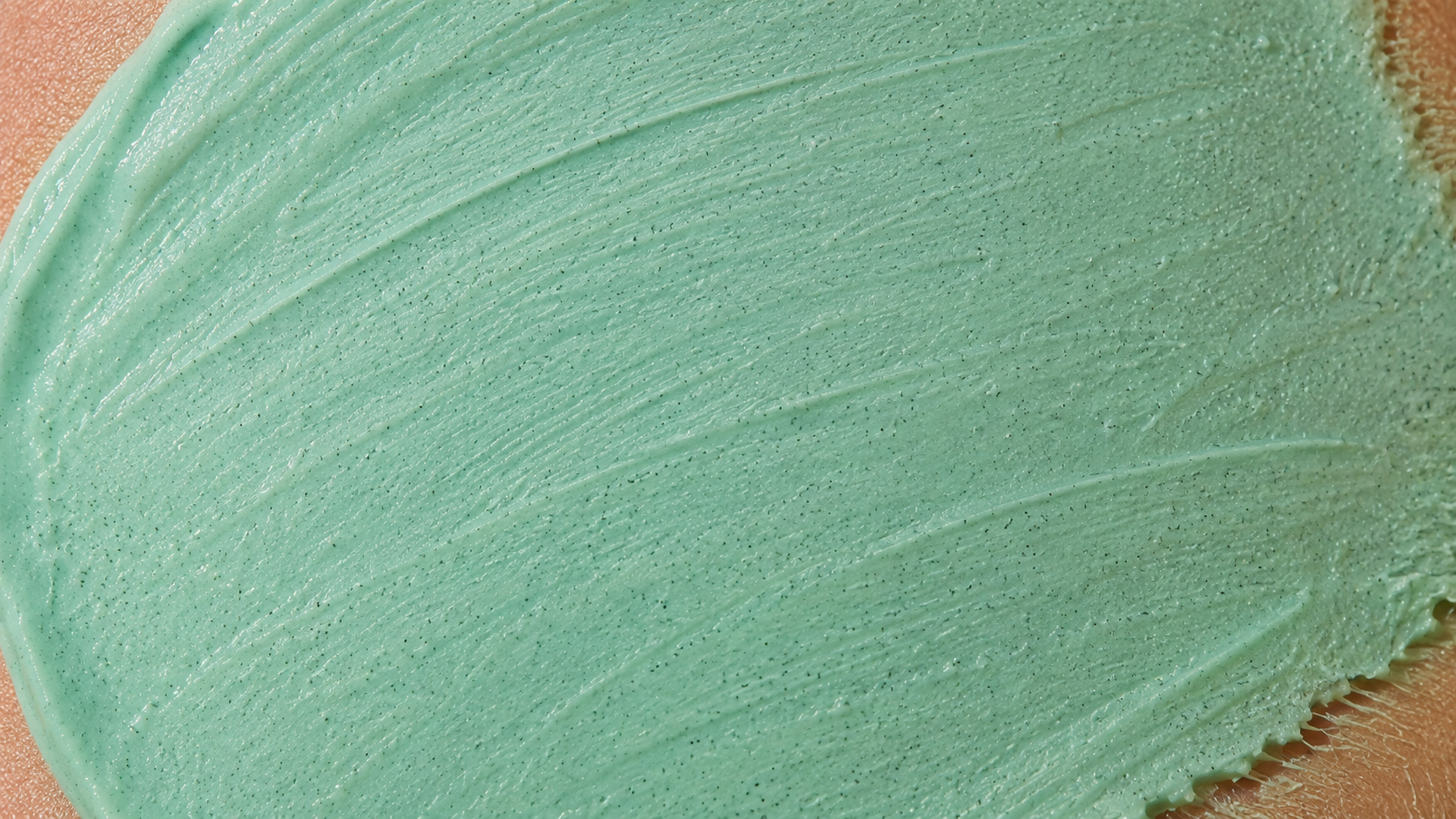
That unspent capacity is part of why the Emerald line lifts oxidized sebum and urban micro-pollutants off your skin, instead of just sitting on top of it.
Ocean-grown algae spends that capacity out in the water, before you ever open the jar.
Ours spends it on your face.
Same biology. Completely different destination.
And contamination control is, in fairness, the entire reason closed reactors were invented in the first place. Researchers needed to keep competing organisms out and hold conditions stable.
We’re using an established piece of process engineering for exactly the reason it was built — which feels less like innovation and more like just reading the manual.
06The footprint
The footprint — and the part where we stop the sentence early.
This is normally where a brand reaches for “carbon negative.”
We’re not going to. And I’d rather explain why than let you find out on your own later.
Absurdly fast, remarkably small
Microalgae grow something like ten to fifty times faster than terrestrial plants, with some species ready to harvest inside of a day. That yield density is why the physical footprint stays small — a fraction of the land and freshwater conventional oilseed crops need for comparable output (there’s a 2022 life cycle assessment in the Journal of Cleaner Production on this). A closed loop recirculates its water rather than losing it, and evaporative loss is far lower than an open pond. And because the growth is photosynthetic, the biomass really is fixing atmospheric CO2.
Running a sealed system takes electricity
And in published life cycle assessments of photobioreactor biomass, electricity isn’t a footnote — it’s the dominant contributor. On top of that, the carbon we fix into the biomass doesn’t stay fixed. It goes into a jar, then onto your skin, and eventually those compounds decompose and let it go again.
79%
of one industrial photobioreactor plant’s total footprint traced back to electricity alone
So, plainly
Low footprint, high yield, water-frugal — and not carbon negative.
A closed loop is a containment strategy, not a climate offset.
We’d rather be the brand you can check than the brand that sounded best in the moment.
07At the mirror
What any of this means when you’re standing at the mirror.
Every ingredient decision here runs through one filter: whether we actually know what’s in something, or whether we’re just hoping.
- The formulas are waterless — because water invites preservatives.
- The carrier base is 70% squalane, 30% jojoba — roughly the ratio your own sebum already runs at, so your skin reads it as native rather than foreign.
- The algae is grown in a sealed freshwater loop — because the alternative is an active ingredient whose contents get decided by a coastline we’ve never visited.
You’ve spent years reading labels because brands kept giving you reasons to.
We’d like to be one that holds up when you do.
If you want the easiest place to start, the Chlorella Algae Clay Mask is where the algae is most concentrated — about 40 fresh-mixed applications, and under a dollar each.
If you’d rather do the whole thing properly, the Complete Algal Ritual takes 22% off the full system.
No ocean. No compromise.
— Brennan
08The sources
Every source, in one place.
The same eight, gathered up. Each one is also linked beside the claim it supports, further up the page.
- Elevated heavy metal concentrations in wild and farmed sugar kelp (Saccharina latissima) in New England
- Heavy metals in seaweed: implications for health benefits, risks and safety regulations
- Dietary exposure to heavy metals and iodine via seaweed consumption in the European population
- Experimental evaluation of seaweeds as a vector for microplastics into marine food webs
- Microplastics in the commercial seaweed nori
- Seaweed as a sink for microplastic contamination: uptake, identification and food safety implications
- Life cycle inventory of microalgae production in a closed multi-tubular photobioreactor
- Microalgae cultivation in photobioreactors: sustainable solutions for a greener future
The Algae Aura Promise
Every bottle arrives risk-free.
-
30 Days, Free
Money-Back Guarantee
Wear it, sleep in it, judge it in your own mirror. If your skin isn’t calmer, softer, and brighter within 30 days, we refund you in full — single bottles and bundles alike.
-
2–7 Days
Fast U.S. Shipping
Packed and dispatched from the United States, tracked from the moment it leaves the warehouse. No overseas wait for it to reach you.
-
$5 Flat
Shipping, Capped
One rate on every order — a single bottle or the whole ritual, the number never climbs. Past $65 it drops to zero on its own.
-
22% Off
Every Bundle
Build the full ritual and the whole set comes in 22% under the price of the same pieces bought alone.
-
Loyalty Pricing
Subscribe & Save More
Start a subscription and unlock a loyalty discount that carries into every future order. Cancel any time.
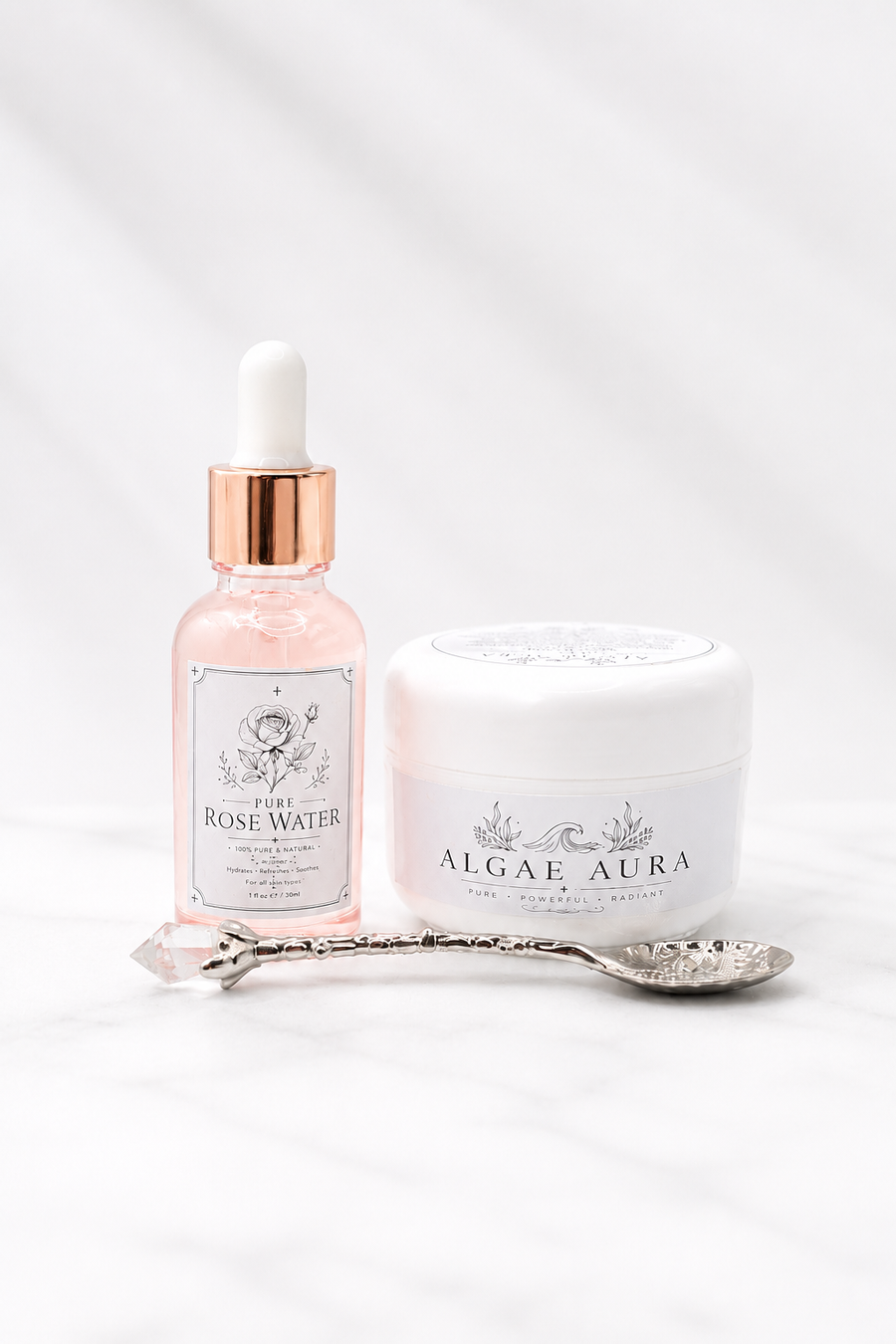
Chlorella Algae Clay Mask
Where the closed-loop chlorella sits at its highest concentration. Mixed fresh each time, so nothing has to be preserved — roughly 40 applications per jar.
View Product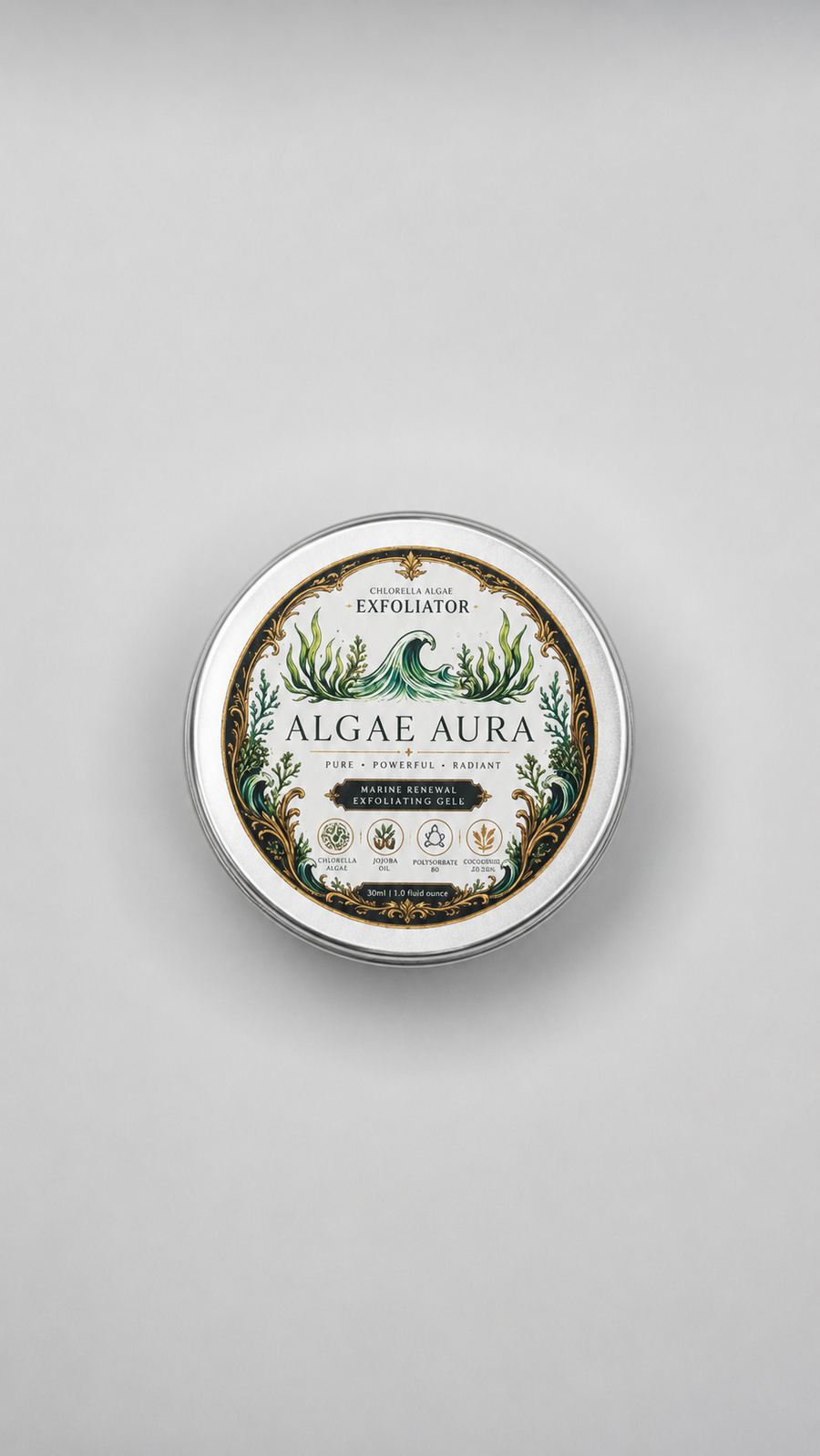
Micronized Chlorella Exfoliator
The same freshwater-grown chlorella, micronized. Lifts the dulling layer so everything after it lands on skin that can actually take it.
View Product
Build the Full Ritual
Mask, exfoliator and your choice of oil or salve — the whole set at 22% under the price of the same pieces bought alone.
Build Your Ritual