

Sunscreen
Blocks.
A shield between the sun and your skin. It stops the radiation it catches — which means it only ever works on what hasn’t arrived yet.
Flat $5 shipping on every U.S. order
30-Day Money-Back Guarantee

A 100% waterless, weightlessly absorbing defense oil powered by pure Astaxanthin microalgae — nature's most powerful antioxidant. Proactively shields your skin against photo-aging, neutralizes free radicals before they break down your collagen, and delivers a deeply protected, luminous glow without synthetic preservatives or harsh fillers.
Powered by Astaxanthin
Illustrative of astaxanthin's singlet-oxygen quenching strength relative to other antioxidants.
Astaxanthin evolved as microalgae's own UV shield. Ruby turns that red pigment into a sensitive-skin antioxidant defense system for daily oxidative stress.
Free radicals can trigger MMP-1, the enzymes tied to collagen breakdown. Astaxanthin helps interrupt that chain reaction to support firmness, bounce and smoother-looking skin.
Astaxanthin's trans-membrane structure spans the cell membrane, helping defend both the lipid layer and the water-rich interior at the same time.
The 70/30 squalane-jojoba base feels familiar to skin: oil absorbs weightless, salve forms a breathable overnight cocoon, and both skip low-pH vitamin C sting.
Wrinkles and fine lines are a chemical reaction, neutralize it.

For maximum absorption, apply to slightly damp skin after cleansing. The biomimetic base penetrates deeper on a hydrated barrier.
Press 3 to 5 drops between your palms to warm the oil. This improves spreadability and ensures even Astaxanthin distribution across your face.
Gently press the oil into your skin with both palms. Pressing rather than rubbing protects the Astaxanthin molecules and maximizes cellular absorption.
A sunburn isn’t heat. UV radiation lands in your skin, knocks electrons loose and starts a chemical reaction — free radicals tearing through cell membranes, and an enzyme called MMP-1 switching on to break down the collagen underneath. That reaction is where most of what people call aging actually comes from.
This is not a sunscreen. It does not replace your sunscreen. Wear your sunscreen. Sunscreen is the first layer, and it is non-negotiable.
Blocks.
A shield between the sun and your skin. It stops the radiation it catches — which means it only ever works on what hasn’t arrived yet.
Neutralizes.
The same astaxanthin, carried in a base your skin reads as its own — 70% squalane, 30% jojoba — so it absorbs into the membrane where the reaction is actually running. It handles what already got in.
A shield has a hard limit: it only works on what it catches. And almost nothing catches all of it.
The moment any of it gets past, the reaction starts — and blocking has nothing left to say about it. Blocking and neutralizing are two different jobs. Almost everyone is only doing one of them.
Haematococcus pluvialis is a freshwater microalga that lives in puddles and rock pools — water that evaporates out from under it in full sun. A single cell can’t build a shield, so it built the other answer instead: astaxanthin. It doesn’t hide the cell from the reaction. It neutralizes the reaction as it happens.
And it anchors across the whole cell membrane — the fatty outer layer and the watery interior at once. Vitamin C only works in the water phase. Vitamin E only works in the lipid phase. Astaxanthin spans both, and suppresses MMP-1 while it does it, which stands down the crew dismantling your collagen.
That is what is in the dropper. Three to five drops, pressed in each morning under your sunscreen — or at night, for everything the day got through. Both is better.
Our astaxanthin-bearing Haematococcus pluvialis is cultivated inside a pristine freshwater closed-loop system — sealed from the open ocean and the contamination risks that come with it. Open-water algae can accumulate heavy metals, microplastics, and industrial runoff as a natural consequence of its growth environment. We remove that variable entirely.
The result is an ultra-clean crop, sustainably cultivated, and verified free from:
When the ingredient is this biologically active, purity isn't a selling point. It's a clinical requirement.
Free from: parabens, synthetic fragrance, silicones, mineral oil, PEGs, and ocean-sourced contaminants.

UV, pollution, blue light, and even normal metabolism create unstable molecules called free radicals. These molecules degrade collagen the same way oxygen rusts metal or browns a sliced apple. Astaxanthin is the reducing agent — it neutralises the reaction before your skin pays the price.
Most antioxidants only work on one side of a skin cell. Vitamin C protects the water-based interior. Vitamin E sits in the fatty layer. Astaxanthin is the only known antioxidant that spans the entire membrane, defending both at once.
Free radicals damage collagen directly and trigger enzymes (MMP-1) that chew through existing collagen. Astaxanthin has been shown to neutralise the radicals and suppress the enzymes — interrupting the reaction at both the spark and the fire.
Astaxanthin is fat-soluble and notoriously hard to deliver. Our 70/30 squalane and jojoba base mirrors your skin's own sebum, carrying the active into the membranes where it actually works. Most astaxanthin products fight their own formula. Ours doesn't.
"Astaxanthin's potency as a free radical scavenger is unmatched in nature."
Board-certified dermatologists Dr. Howard Sobel, Dr. Ava Shamban, Dr. Dendy Engelman, and Dr. Shari Marchbein have each publicly recognised astaxanthin's role in protecting skin from oxidative and UV-induced damage.
We'd ask you to read this first.
Collagen production starts declining around age 25 — at roughly 1% a year. In your late teens and twenties, your collagen factory is still running near full capacity. The problem isn't production. It's preservation.
Retinol stimulates new collagen, but it also brings photosensitivity, peeling, barrier disruption, and a long adjustment period. For younger skin, that's renovation work on a building that doesn't need it yet.
Astaxanthin is roof maintenance. Keep the rain out. Slow the chemistry. Delay the day you need to start rebuilding.
Astaxanthin is one of the most logical companions to a retinol routine, for three reasons:
As one dermatologist-led review put it: astaxanthin "supports the function" of retinoids, and together they work more strongly than either alone.
No fragrance. No botanical irritants. No allergenic proteins. Squalane and jojoba are the closest plant-derived match to human sebum that exists — your skin can't tell them apart from its own.
Anti-inflammatory at the cellular level. Astaxanthin has been shown to calm the same inflammatory pathways (NF-κB, IL-6, TNF-α) involved in rosacea, eczema, and post-procedure redness.
One active. One carrier. Nothing else to react to.
Sourced from Haematococcus pluvialis, a freshwater microalga that produces astaxanthin as its own defense against UV radiation. This is the same compound that gives salmon and flamingos their pigment — and one of the most powerful free radical scavengers found in nature. It neutralizes oxidative stress at the cellular level, protecting collagen and elastin from the silent damage sunlight leaves behind.
Your skin already knows these oils. Squalane is a stabilized form of squalene, a lipid your body naturally produces. Jojoba is the closest botanical match to human sebum ever identified. Together, they're recognized by your skin as its own — absorbing quickly and carrying astaxanthin past the outer barrier into the deeper layers where oxidative damage actually occurs. No film. No clogged pores. No wasted actives.
Fractionated from coconut, MCT is a light, ultra-stable carrier of medium-chain triglycerides — and astaxanthin is fat-soluble, meaning it can only travel in a lipid it fully dissolves into. MCT keeps the active evenly suspended instead of settling out, resists going rancid the way heavier plant oils do, and carries a weightless, non-greasy feel that helps the whole formula sink in rather than sit on top. It also holds moisture in the outer layer and calms the look of dry, irritated skin.
Cold-pressed from the seeds of Rosa canina, rosehip oil is one of nature’s richest sources of omega-3 and omega-6 fatty acids, along with naturally occurring trans-retinoic acid — the same family of compounds dermatologists prescribe for cellular renewal. It absorbs cleanly without clogging pores, replenishing the lipid barrier your skin loses throughout the day while quietly working on fine lines, scarring, and uneven tone.
Rosemary stimulates microcirculation beneath the skin, drawing fresh blood flow to areas dulled by congestion and puffiness. Vitamin E works alongside it as a fat-soluble antioxidant, reinforcing cell membranes already weakened by environmental exposure. Together they don't just protect — they help accelerate the skin's own repair of existing damage from years of accumulated UV stress.
Dr. Ava Shamban, board-certified dermatologist and founder of Ava MD Dermatology:"Because astaxanthin protects against oxidation and UV damage, it functions to protect skin from the external factors causing its degradation."
Reference: The Zoe Report: Astaxanthin Skin Benefits
Dr. Mark Miller, biomedical researcher:"Its potency as a free radical scavenger is unmatched in nature."
Reference: NutraIngredients: Astaxanthin for Skin
The NIH-hosted paper "Astaxanthin in Skin Health, Repair, and Disease" (PMC5946307)
View Research at NIH (PMC5946307)Nothing on this page is required — the Ruby oil does its job on its own, from the first application, every night. But skin takes it in best when the surface has been freshly cleared, so on the evenings you exfoliate or mask first, the same oil simply goes further. Think of these as the nights your routine gets a little extra, not as parts you were missing.
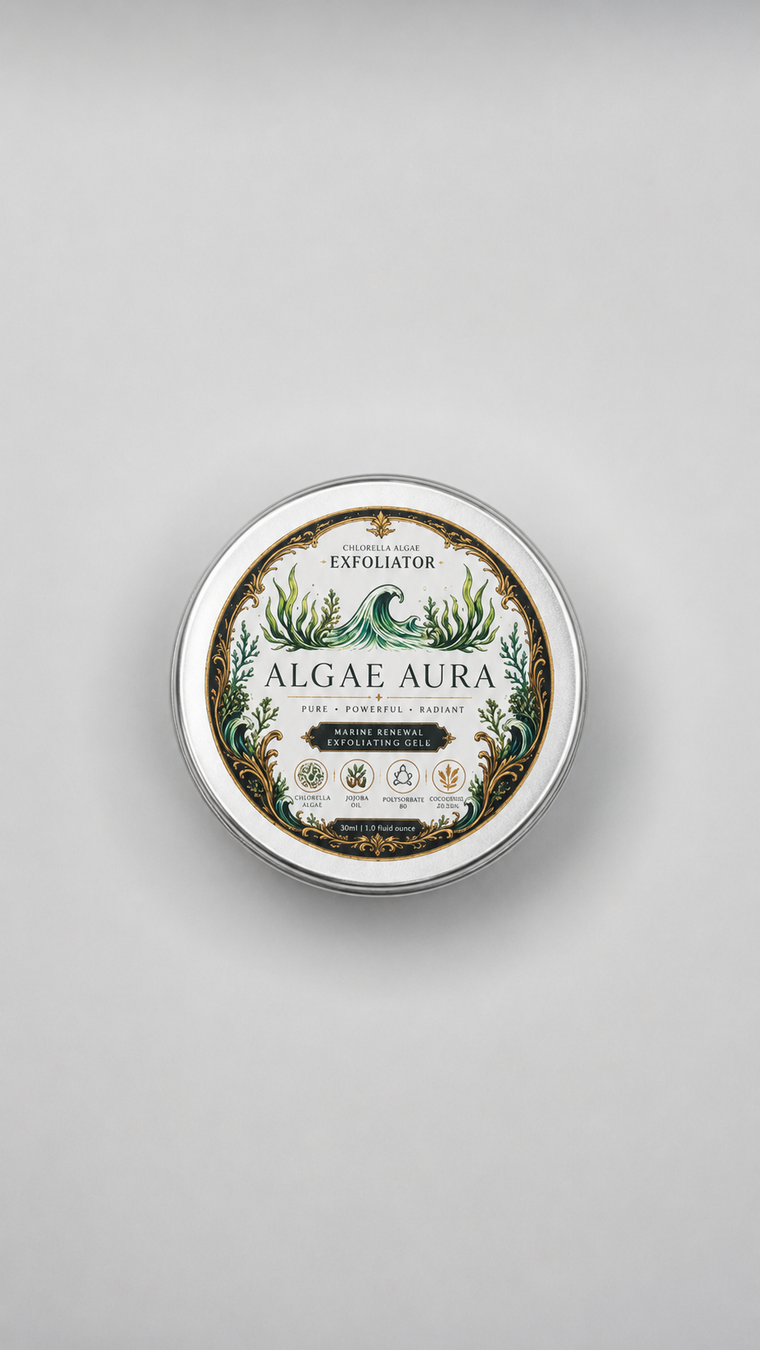 Weekly polish
$28.00 on its own
Adds only $11.28 a $28.00 product for $11.28 more — 59% off
The 22% applies to both items, not just this one — it takes $10.56 off the Ruby oil by itself, which is why the bag only moves $11.28 against the $48.00 you were already spending. Applied automatically, no code.
Why it pairs. Skin takes an oil in best right after it has been polished smooth. Use this once or twice a week and the Ruby oil you already own spreads further and sinks in faster on those nights.
A physical exfoliant rebuilt from the cell up. Micronized chlorella replaces jagged shells and salts with uniform, spherical algal particles — small enough to clear dead cells without scoring living ones. Suspended in jojoba oil and colloidal oatmeal.
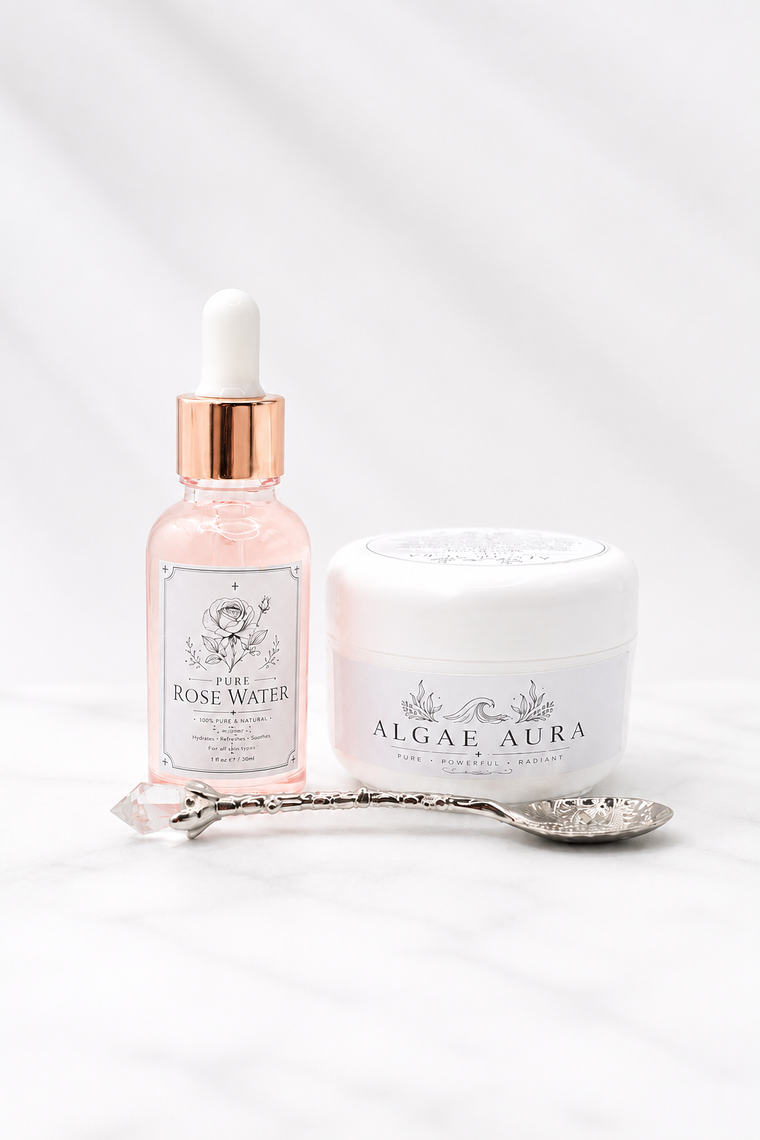 Weekly reset
$42.00 on its own
Adds only $22.20 a $42.00 product for $22.20 more — 47% off
The 22% applies to both items, not just this one — it takes $10.56 off the Ruby oil by itself, which is why the bag only moves $22.20 against the $48.00 you were already spending. Applied automatically, no code.
Why it pairs. A weekly clay draw leaves pores clean and skin calm — an ideal canvas for the Ruby oil that follows. Most people use it Sunday night and notice the difference in how the oil feels for days after.
A mineral-rich clay mask powered by chlorella algae. Roughly 40 masks per jar, each one mixed fresh with the included rose water mist — no preservative-laden pre-mix, just chlorella meeting your skin at full strength. Less than $1 per mask.
No code. No spend threshold. Nothing that waits until order two. The moment your bag holds two items — a second Ruby oil, or one of the two below — 22% comes off everything in it.
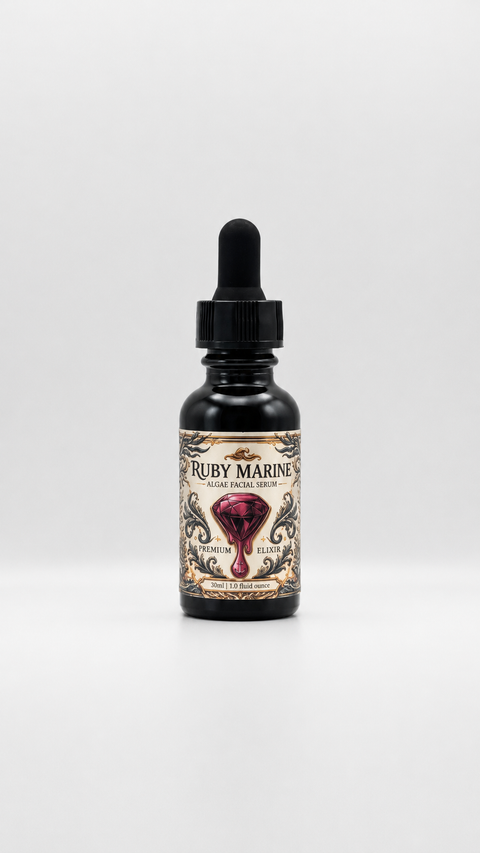
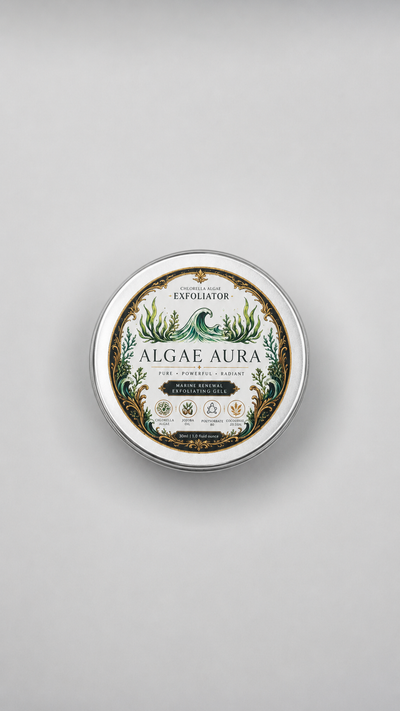
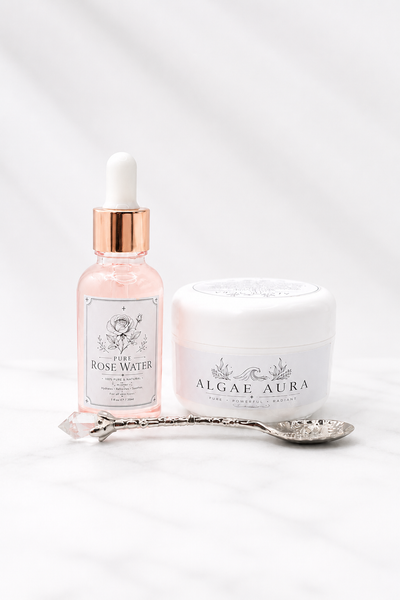
Ruby Cell-Defense Oil + Chlorella Exfoliator
$76.00
$59.28
You save $16.72
That is a $28.00 Chlorella Exfoliator for $11.28 more than the Ruby oil on its own.
Two items is the whole rule. Stock up on a second Ruby oil, or add one of the two above — either way the 22% is already applied by the time you reach your bag.
Or build the full ritual
Farm-to-Face
For a long time, we couldn't find what we were looking for. There were harsh prescription treatments on one side, and feel-good natural products with little science behind them on the other. Nothing in between — especially not for sensitive skin.
So we did the research ourselves.
My wife has always been passionate about skincare — the rituals, the ingredients, what actually works and why. I came at it from a different angle. I'd struggled with acne most of my life, and I'd also become fascinated with microalgae — not just as an ingredient, but as one of the most important organisms on the planet. The more scientists study it, the clearer it becomes: algae is going to play a significant role in how humans live and eat sustainably. That felt worth paying attention to.
When we started combining those two interests — her deep knowledge of what skin actually needs, and my obsession with what algae is capable of — something clicked. We spent months researching, formulating, and testing on ourselves. What we discovered is that the skin doesn't need more actives thrown at it. It needs ingredients that work with it, delivered in a way the skin already understands.
These products came out of that process. They're what we actually use. Every morning, the two of us still do our skincare rituals together — and that hasn't changed since the beginning.